Search Website
Course Descriptions
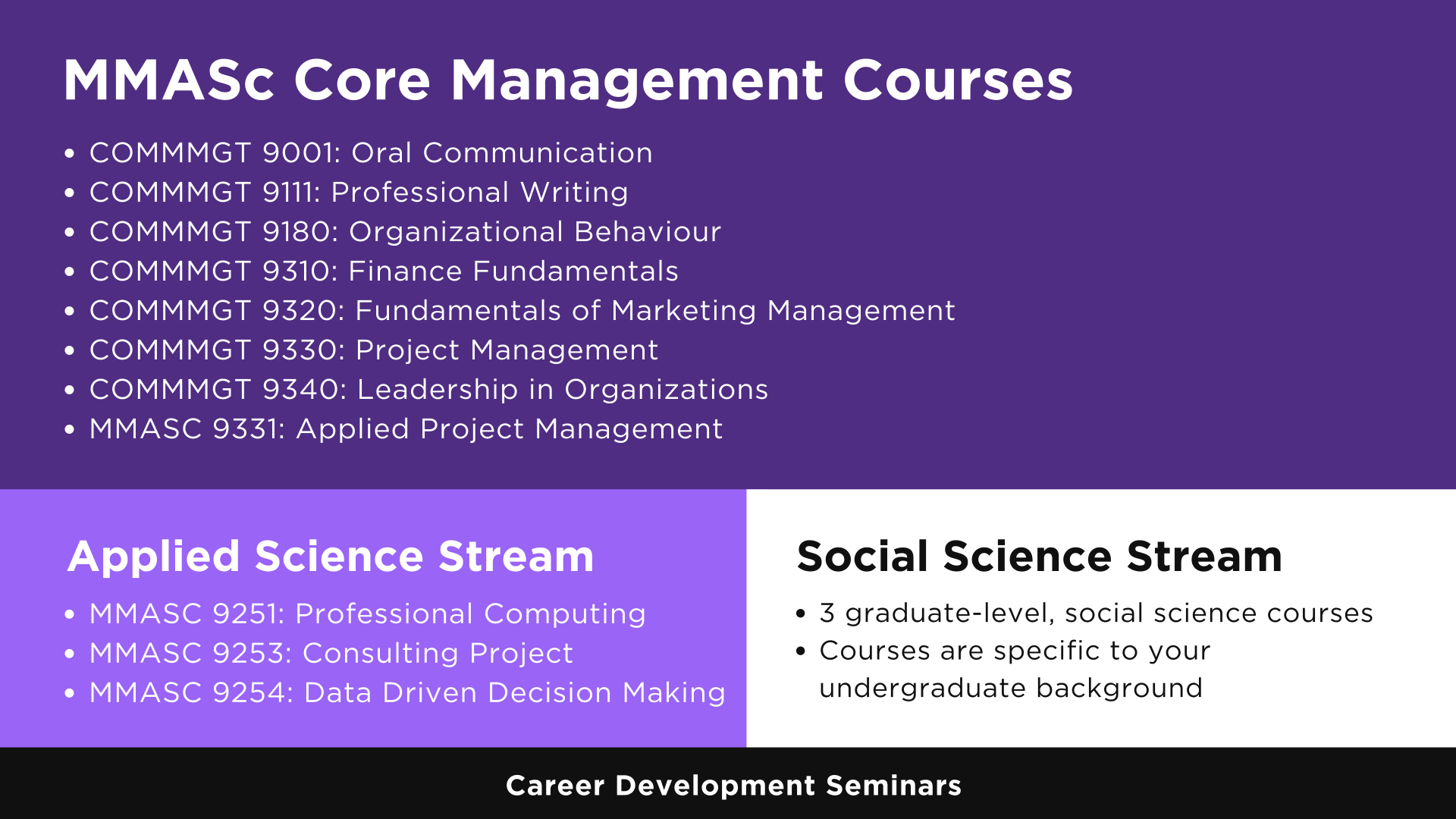
Core Management Courses
The objectives of this course are to develop skills applicable to writing in a professional context, including audience analysis, techniques of persuasion, knowledge of rhetorical conventions, working within short timelines, report writing, grant and proposal writing, document design, and editing.
On successful completion of this course, students shall be able to:
- Develop and support sustained and original arguments
- Cultivate critical analysis skills through the practice of writing
The objectives of this course are (1) to provide an understanding of the roles and responsibilities of management to ensure organizational effectiveness and success, and (2) to prepare students to begin to assume these roles and responsibilities. Topics include how and why organizations are structured to be effective, what determines individual
On successful completion of this course, students shall be able to:
- Understand the differences between the various management models/theories
- Explain the differences between managers and leaders
- Appreciate the individual differences which exist in people
- Know when to apply which motivational model
- Describe the similarities and differences between power and politics
- Work effectively in an organizational context
The objective of this course is to develop advocacy skills through the art of delivery, informative and persuasive speaking techniques, self-representation, various presentation modes including new media, and effective group work.
On successful completion of this course, students shall be able to:
- Communicate ideas, issues, and conclusions in a clear and audience-specific manner
- Prepare and deliver effective presentations
- Participate productively in group or committee work
This course introduces students to financial management. We begin with mastering the key financial statements used for financial analysis and then learn how to use these in applying accounting standards and managerial incentives for the organization. The course also delves into financial decisions, capital structure and other special topics. Real-time data and directed readings will be used to enhance learning.
On successful completion of this course, students shall be able to:
- Understand the mechanics of financial reporting and how to apply this to managing the organization
- Prepare basic financial plans for an organization
- Understand the time value of money
- Comprehend the relationship between risk and return and its impact on management choices
The objectives of this course are to provide an understanding of (1) marketing concepts and their application to organizations, society, and individuals; (2) the need for customer orientation in the competitive global environment; (3) how marketing integrates with other functional areas; and (4) how to successfully develop, execute, and manage marketing strategies. Topics include the buyer
On successful completion of this course, students shall be able to:
- Understand marketing concepts and their application to profit and non-profit organizations
- Recognize how the global, natural, sociocultural, demographic, legal, economic, and competitive environments shape companies and customers alike
- Understand how marketing mix elements are developed, carefully blended and managed over time to achieve branding and other marketing objectives and to build long-term relationships with consumer and/or business customers
- Apply techniques gleaned from marketing research, case analyses, and developing marketing plans to real-world situations, in terms of identifying marketing opportunities and solving marketing problems by crafting creative marketing strategies
- Appreciate the ethical dimensions of the marketing function
The objective of this course is to prepare students for a project management regime of organizing work and people either as the initiators of such a regime (i.e. project managers or team leads) or as workers within that regime. The course will be designed to follow the project life cycle where topics will be arranged to cover the stages of initiation, planning, and execution. Topics
On successful completion of this course, students shall be able to:
- Understand the evolution of the project-based organizational structure and other managerial models
- Understand the framework of a project-based workplace and its implications for other components of management (i.e., recruitment and selection, compensation, motivation, leadership, employee development, and career management, etc.)
- Understand the lexicon and professional standards of project management as per the globally recognized Project Management Body of Knowledge (PMBOK)
- Apply the guidelines and procedures learned to a large term project
- Apply knowledge of PM principles to understand real-world industries
- Work successfully in diverse project teams
The objectives of this course are (1) to provide an understanding of what constitutes leadership in an organizational context, and (2) to prepare students to undertake leadership roles in their careers. Topics include the roles and responsibilities of leadership in an organization (leadership of self, leadership roles in teams and with peers, leadership positions in an organization, ethics), leadership skills and how to develop them, developing followership (participative leadership, delegation and empowerment), using power versus influence, and leading change in an organization.
On successful completion of the series, students shall be able to:
- Understand the roles and responsibilities of leadership in an organization
- Demonstrate self-awareness and manage themselves effectively in leadership roles
- Engage in a development plan to enhance their leadership skills
- Manage interpersonal and team relationships effectivelyAdapt to and lead change in an organization
Applied Science Stream Courses
Social Science Stream Courses
Social Science Courses Students take three graduate level social science courses. The three electives must include a minimum of one course from each category: (a) methods, (b) substantive. The participating departments and course selection are determined on a yearly basis and confirmed with students on an ongoing basis.